Author Archives: wordofmouth

Unknown's avatar

About wordofmouth

Journalist, writer and language fanatic

The latest from the font

Standard

April 16, 2010

I have Georgia on my mind. Literally.

I recently changed the typeface of my document program at work to Georgia to synchronize it with my e-mail and word processing program at home, so I am now immersed in the same familiar characters all day long.

I find the text in this typeface appears friendly and charming, beckoning me into the white space around it. It’s to the point where if someone returns one of my documents in another typeface, I’ll convert it back into Georgia.

Indeed, I’ve become very attached — which to me seems a bit crazy. I mean, it’s a font.

There are so many types in the world today. (Associated Press) 

Today, as different typefaces become more widely available, it’s easier to find one that suits your style and personality.

There are tens of thousands of typefaces, with more being invented all the time. And thanks to a new software program called Typeface, anyone can have the ultimate personalized font.

With Typeface, you sit in front of the computer webcam and its software designs a font based on the shape of your face and expression — bulbous nose, arched eyebrows and all.

So it would appear that there is some larger desire to personalize the script we use to punch words onto screens every day.

Perhaps we’re seeking more connection to the words we type. Or perhaps typeface is becoming the new handwriting. Let’s look at the facts.

Like your own signature

Handwriting, we can all agree, is in a downward spiral. I can count the number of times I pick up a pen on an average day on one hand. The emotional connection I have with my writing has been relegated to late night scribbling.

Experts have long argued that handwriting is important to help us feel connected to the words we shape and to help develop our individuality.

But if we’re writing less by hand, it seems the emotion will have to come more through the machines we use. Hello…Georgia!

Colleen's favourite typeface. (CBC)

“More people are gravitating towards a favourite typeface,” says Keith Rushton, chair of graphic design at the Ontario College of Art and Design.

“It could be they want to personalize it, or just gravitate away from the default typefaces.”

Rushton himself has 10 favourite typefaces and he points out that many authors want their books set in a particular typeface, one they feel represents them.

Some writers, such as Mordecai Richler, Chaucer, Lord Byron and Jonathan Swift, even have scripts named after them.

“It’s like developing your own signature,” says Rushton. “Why not have your own typeface?”

Nice curves

The language that’s used to describe typefaces helps explain why some of us get emotionally attached.

Georgia, for instance, is said to be “sturdy.” It “exudes a sense of friendliness; a feeling of intimacy” and is from a family with “character and charm” whose typeface ancestors are Scotch Roman. Given this description, Georgia is practically ready to strut across the screen and down a few pints.

Rushton says it’s not unusual for typographers to say things about a favourite font like “that’s an incredibly sensual typeface,” or that the typeface has nice thick and thins, beautiful curves or nice rhythm, crescendo or composition.

In this sense, typeface imbues us with the warmth and familiarity of a favourite song, or our own script.

Evolution of style

Perhaps the evolution from personal handwriting to typeface is just part of the natural progression of language.

For his part, Rushton says typefaces are a language unto themselves and have developed along with the written word.

Letter forms have progressed as our language has moved from walls to tablets, then to leather and paper, and now to screens.

The 18th century printer John Baskerville graduated from stone to paper, parlaying his talent engraving gravestones into the popular Baskerville typeface.

In the acclaimed documentary Helvetica, design writer Rick Poynor makes the point that “people are starting to see graphic communication as an expression of their own identity. You can change the background, you can put pictures in, you can change the typeface to anything you want. And those choices, those decisions you make become expressions of who you are.”

Now, of course, just because I’m writing an e-mail or document in my font of choice doesn’t mean the recipient’s computer recognizes that font. (And the personalized font based on my face currently resides on my laptop alone.)

But an ever-growing number of fonts are available to download to help us personalize our e-interactions, and so gradually make typeface a more viable replacement for handwriting.

More than anything, I find it’s important to simply write for myself in a font I feel emotionally connected to.

Maybe you’re just fine with using Helvetica or Times Roman for your computer-based writing. But I, for one, will continue to have Georgia on my mind.

I luv phonetics

Standard

March 5, 2010

Learning to pronounce English words isn’t easy. Vow doesn’t sound anything like show, despite how they look, and trough is different from though, as is book from boot. And don’t get me started on split-personality words such as (to) close and (too) close.

When I was teaching, my students asked me why there was no consistency in how English words are sounded out and I said that’s just the way it is, silently cursing the minions who came up with these arcane rules for pronunciation (or pronounciation as some people incorrectly say).

When D'oh is not a deer. (Reuters)When D’oh is not a deer.

And that silent curse was just a native English speaker’s perspective. It made me want to know how one of the fastest-growing populations of non-native English speakers, the Chinese, feel about this tricky pronunciation.

In Toronto’s Chinatown where sidewalks are crammed with vendors and shoppers loading up on the week’s fruits and vegetables, shop worker Rin Song says she often stumbles on unfamiliar English words.

“Sometimes I think this word may be pronounced like this, but actually what I hear is different. I have to listen many times. If you give me the paper, I know the meaning. But when I hear it, I don’t know.”

When I ask Song to pronounce the word latex on the package of gloves she’s hanging on the wall, she uses the short a, as in latter, instead of the long a. She’s never heard the word before, so she’s taking a flying leap into its pronunciation.

Say what you see

I’ve long wondered why we don’t have a more effective way of teaching this language of ours — so that what you see is actually what you say.

It turns out that a local teacher named Judy Thompson has come up with one, laid out in her aptly titled book, English is Stupid.

Thompson is an ESL and English teacher at Sheridan College, just outside Toronto. She says we have to start with the premise that writing and speaking are different languages with different rules.

“When you teach a set of rules for one skill, and you expect a result in another, well, you don’t get it,” Thompson says. Indeed, the road from reading words to speaking them like a native is filled with potholes.

According to Thompson, the biggest problem in teaching English pronunciation is that the traditional way of using the International Phonetic Alphabet (IPA) simply doesn’t work.

You remember those nonsensical hieroglyphics beside a word in the dictionary. Think hard: Have they ever helped you?

The IPA was actually developed in France so that any language could represent its sounds by drawing from a standard set of symbols. Good idea, but très compliqué.

“I had a terrible time learning the International Phonetic Alphabet,” says Thompson. “And I thought if I can’t learn it, how can you learn it if English isn’t your first language?”

Those darn vowels

Thompson found the hardest sounds for foreigners to lift off the page are vowels. So she created her own system — a vowel colour chart.

“It was just kind of a freak coincidence that the colours in English, besides being the first thing people tend to learn in a language, have a vowel sound embedded in each of the names of the colours.

“So the long a sound is in the colour gray. And the short vowel a is in the colour black. And the long e is in the colour green. And on and on and on.”

So the words cat, mask, apple, laugh and plaid are all black. Thompson says it takes students less than an hour to learn the 16 sounds in the chart.

“So when they come up to a word and they don’t know, for example, busy and they want to say bussy, then you say ‘it’s pink’ and they say busy. And then you just keep going. It’s really expedient.”

Thompson says she’s getting great feedback from her students as well as other teachers.

Keep listening

Alas, new words can always trip you up. When the first Harry Potter book came out, oh so many years ago, the whole time I was reading it, I thought the name Hermione was pronounced hermee-own, like anglophone.

But it’s actually her-MY-o-nee, like anemone. D’oh! It was only by chance that I overheard someone more in the know and learned the error of my ways.

So it seems a big part of learning how to pronounce words is to keep listening.

But here’s a thought. Maybe written English will gradually come to resemble spoken English as foreigners slowly take the language over from native speakers.

There are now more than a billion non-native English speakers in the world and most conversations in English happen between two people speaking it as a second language.

A standardized “global English” is spawning new vocabulary, grammar and pronunciation, spread by the media, internet and all forms of technology.

Texting alone is gradually killing off vowels. Why say “I love you” when you can say “I luv u”? They say it means the same thing. And it actually looks like it sounds.

For actors and accents, blame Meryl Streep

Standard

Dec. 11, 2009

Invictus is a great premise for a movie: the rugby game that helped unify post-apartheid South Africa. But I have to say that I was a little thrown by the accents.

Matt Damon, who plays the rugby team captain, has nailed the South African sound. But Morgan Freeman sounds like, well, Morgan Freeman.

That’s not good because he’s supposed to be Nelson Mandela. In every other way he appears to be. But without the accent, it’s just not complete.

In Invictus, Morgan Freeman portrays Nelson Mandela and Matt Damon plays rugby champ Francois Pienaar in post-apartheid South Africa. Accent-wise, Damon nails it. (Keith Bernstein/Warner Bros./Associated Press)   Morgan Freeman and Matt Damon in Invictus.

Maybe I’m being overly critical, but it seems I’m not alone in demanding our best actors make their characters more authentic by mastering these regional dialects.

Voice coaches say actors are increasingly expected to know not only standardized accents, such as American and British, but regional ones as well.

Think Leonardo DiCaprio’s Boston diction in The Departed; or the 1930s New York tones in the recent biopic Amelia or Cinderella Man.

A multicultural diet

All this accentuation of accents means more pressure on dialect coaches.

“I have more responsibility than my predecessors,” says Eric Armstrong, voice coach and associate professor of theatre at York University.

“When I started, I wasn’t trained to coach people to do Asian or African accents. I was focused on the former British Commonwealth and Europe. Now I’m expected to do anything from anywhere in the world.”

Armstrong has taught about 50 accents over the 15 years he’s coached actors, including the cast of CBC TV’s The Border, English actor Tom Wilkinson of Michael Clayton fame, and Dora-nominated stage actors.

He says it’s not just a standard American accent that actors are expected to know but New York, Pittsburgh and Southern Illinois. Nor is it just African, but Ghanaian and Somali; not only Asian but Japanese, Chinese and Korean.

Why is this happening? Well, because “people are becoming much more aware of accent and dialect because we’re living in a much more global market,” says Armstrong. “So our ears have become attuned to a higher standard of precision and accuracy.”

Our attention to regionalisms is partly because we’re hearing more original accents in films.

But more significantly, it flows from the steady diet of accents we take in through daily media consumption, travel, and living in increasingly multicultural societies.

Blame Meryl

Diane Pitblado, the voice coach to the stars, says the growing pressure on actors to adopt accents may go back to a single source: Meryl Streep.

Meryl Streep, receiving a lifetime achievement award in Rome, in October 2009. She made accents part of the craft. (Andrew Medichini/Associated Press)Meryl Streep, lifetime achievement award in Rome, Oct. 2009. 

From Sophie’s Choice to Out of Africa, Evil Angels and the recent Julie and Julia, Streep proved it could be done and encouraged actors to be brave and do it as well.

Pitblado says audiences should demand their actors sound spot on. She was brought in to coach Hilary Swank, Richard Gere and the rest of the gang in Amelia.

But she says the movie makers originally questioned whether to adopt accents, whether audiences wanted to wade through such a different sound.

Her take was: you’ve got the hats, the clothes, the sets, how can you not speak as if you’re from that place and time?

There are, of course, multiple challenges in getting actors to sound like they’re from a different place and time.

For one, actors have to get used to distinguishing different sounds, something called phonemic awareness.

Lips forward

As Eric Armstrong points out, sometimes a vowel sound in one accent is split into two sounds in another accent. Take the word hot dog.

In a New York accent, the o in hot is different than the o in dog. So it becomes haht dooawg.

“New York is one of those accents where it helps to start with a visual reference point,” says Armstrong. “Imagine Donald Trump who often speaks with lips forward, like a kiss.”

Try it. Lips forward. Say hot dog. Now keep that up through an entire script. Not so easy, is it?

Armstrong says that picking up the technique is like learning how “to hear with your mouth. You learn to make new sounds, so then you begin to recognize those sounds.”

Another challenge in teaching regional accents is when the actor is dealing with a completely foreign tongue.

Say a Chinese actor wants to do a number of Asian accents, which is becoming more common.

But say that actor is second generation Canadian and doesn’t speak fluent Mandarin.

In this case, Armstrong says, the difficulty is teaching people to make sounds they’ve never had to utter in their life: “Part of it is oral gymnastics, making their tongues, lips, jaws go into new places.”

And then there are the accents that are just not that common, such as, say, New Orleans Creole. Or an accent that’s a blend of different regions like Amelia Earhart’s.

Earhart was from Kansas but lived in New York high society, so she was kind of like a blend of Dorothy from the Wizard of Oz and Katharine Hepburn.

When dialect coaches need help, they can phone librarians in small towns or resort to the online International Dialects of English Archive at the University of Kansas, which offers audio samples of voices from Cameroon to Kuwait to Colombia.

But what if, after all that research and coaching, an actor just doesn’t get it?

Obviously it’s disappointing to the dialect coach. But it’s the audience that really suffers.

Sure, not every actor is a Meryl Streep. But if you make a living impersonating other people, it’s your duty to be as authentic as possible — right down to the last vowel.

Just imagine if we were better storytellers

Standard

Sept. 1, 2009

When I was young, my family went downhill skiing almost every weekend. It was fun and great exercise, but truth be told, some days were long. And cold. So to entertain myself, I made up a soap opera called On the Slopes.

I created several plot lines with different characters, even different accents, and told the stories aloud to my imaginary audience as I barrelled down the ski run. I recall many dramatic scenes in the emergency room involving doctors with gratuitous British accents.

The soap opera format was perfect, because I could just pick up the plot when next on the slopes.

Perhaps this imaginative storytelling propelled me toward a career in broadcasting, in which oral stories are so central. As a journalist, I’ve listened to many people speak — at all levels of government, at conferences, in churches, at rallies, at funerals. I’ve laughed. I’ve cried. But often, I’ve sighed. I wish more people knew how to tell good stories.

It turns out that good storytellers may be made in childhood. The key? Imaginary friends. Research shows that anywhere from a quarter to half of young children have played with them.

Now, a study has found that imaginary friends — whether they’re named Emily or Giant Strongman, whether young or old, male or female — help children become better storytellers. And that in turn, helps boost their reading comprehension and overall language skills.

Storytelling starts young

In the July/August issue of the journal Child Development, researchers investigated the language skills of 48 boys and girls aged 5½, about half of whom had imaginary friends.

Associate professor Elaine Reese of the University of Otago in New Zealand and her former student Gabriel Trionfi first assessed the children’s language skills by measuring their vocabulary.

Then they asked the children to tell two types of stories: fictional and realistic. In the fictional storytelling activity, the children were read a story rich with dialogue and then asked to retell the story to a puppet. In the realistic storytelling activity, they were asked to tell a story about a real-life event such as a trip to the beach.

While the children didn’t differ in their vocabulary skills, the children with imaginary friends used more dialogue and characters in retelling the fictional story, and gave more information about time and place in the realistic story.

One child described going to an A&P show — an agricultural exhibition — with heaps of horses jumping and winning ribbons, and cows going around in a big circle in a paddock. Not bad for a five-year-old.

The researchers say the children with imaginary friends told higher-quality stories than the others; they simply get more practice telling stories both to their friend and to other interested folks.

Trionfi says it’s a gift: “Understanding how to tell a story to someone who wasn’t there, or doesn’t know what you know, all takes abstract thinking skills.”

We don’t develop our storytelling skills

So if that many children are telling stories — and telling them well — why are so many of us so bad at it later in life? As I see it, we don’t carry storytelling with us into our professional lives, unless we actually work in a story-reliant industry such as journalism.

Ottawa-based communications expert Barry McLoughlin says many of us don’t exercise the storytelling muscle enough, so it atrophies. And somewhere along the line, it becomes more difficult to talk about emotions in public. To be a good storyteller, you need to put yourself on the line.

“With the oral storytelling tradition, you’re telling an anecdote, you’re revealing something of yourself,” says McLoughlin. “Revealing yourself is highly uncomfortable. It’s off script. It means taking a risk.”

The other reason for diminished story telling, according to McLoughlin, is technology: “Oral storytelling is a lost art that has been superseded by the screen. Now it’s the visual tradition. Now it’s show me.”

More important than ever

But show me doesn’t guarantee we’re getting information that helps us actually understand the world.

“We need someone to tell us a story to make sense of it all. There’s so many competing claims out there. The recession for example; the economy is up, it’s down,” says McLoughlin. “We have information overload. What we want is knowledge.”

The finest stories combine information with colourful images. That’s the best way to ensure that people remember our message.

Former U.S. president Bill Clinton: A natural storyteller. (Mike Wintroath/Associated Press)

It’s rare to see in person a former U.S. president known for his compelling speaking style. Several years ago, I had the fortune of seeing Bill Clinton when he was in Winnipeg.

One of his points was that giving poorer countries more economic help encourages peace and prosperity. He wove a tale about a Ghanaian woman who ran after him on the airport tarmac to give him a shirt made possible through the Africa trade bill. It was one of many stories filled with both vivid images and relevant statistics.

About 1,600 people sat in the theatre that night, but you could have heard a pin drop. And last week in Toronto, he wooed audiences once again.

A good, focused story can relay information so much more effectively and memorably than dry statistics and gobbledygook.

We need to drop the paradigms and consultative processes, the passive constructions, the subjunctive clauses.

When we tell a story, we’re more conversational. Our message is clearer. More interesting. More emotional. More powerful.

I say tell stories and tell them often, even if it means getting yourself an imaginary friend. In the meantime, I’m going to work on a summer version of On the Slopes.

Superlatives at their absolute best

Standard

May 15, 2009

Let’s get one thing straight. Susan Boyle may be an inspiration for the underdog, but she’s no hero. And yet, I’ve heard people describing her with the h-word and seen the screaming headlines: “Scotland’s New Hero,” “From Zero to Hero”, “An Unlikely Hero.”

Susan Boyle, whose performance on the television show \\\\\

Boyle is the latest in a string of untraditional heroes that includes athletes, performers and politicians. You can strum yourself into a Guitar Hero after watching the TV show Heroes.

The excessive use of the word hero is just one example of our penchant for superlatives (as in ” />

Boyle is the latest in a string of untraditional heroes that includes athletes, performers and politicians. You can strum yourself into a Guitar Hero after watching the TV show Heroes.

The excessive use of the word hero is just one example of our penchant for superlatives (as in ” />

Boyle is the latest in a string of untraditional heroes that includes athletes, performers and politicians. You can strum yourself into a Guitar Hero after watching the TV show Heroes.

The excessive use of the word hero is just one example of our penchant for superlatives (as in “something that embodies excellence”). They reflect our growing need to stand out in a world crowded with people and products jostling for attention. Superlatives help something quite ordinary and average sound better than it may actually be. Essentially, we’re searching for worth, and we’re having to reach further and further to get it.

“In the days of the Greeks, heroic referred to a superhuman feat that few other mortals could achieve,” says Eric Bronson, a professor of humanities at York University. Nowadays, we adhere more to Jonathan Swift’s prescient observation: “Whoe’er excels in what we prize/Appears a hero in our eyes.”

Amazingly intense competition

“It’s understandable that we go to greater and greater lengths to get public recognition,” says Bronson. He claims it’s the result of a breakdown of extended and nuclear families, combined with growing bureaucracies that dehumanize us in the work place.

Jeremy Sherman, an evolutionary epistemologist, sees superlative inflation as compensation in a meritocracy: “There’s less room at the top and more people competing for it, and therefore much more stress.”

We no longer say we’re good or experienced at something. Instead, we have the highest certification, the best companies as employers, and the most outstanding references. We use adverbs to pump up adjectives to pump up nouns: the most amazingly brilliant student or an absolutely first-rate, world-class designer. We just keep climbing up the linguistic ladder.

And we don’t use superlatives just to puff up ourselves. We need to puff up our lifestyles and the products we consume to maintain those lifestyles. Our cereals are the healthiest, our cars are the most fuel-efficient, and our water is the purest.

Heights of purity, morality

Strolling down any supermarket or pharmacy aisle, we’re accosted by so many ultra, superior, ultimate and mega superlatives, it’s a wonder they don’t shove each other off the shelves. Marketing experts say it’s especially noticeable in products related to the environment, aging, and organic (or any ultra good-for-you) food. It seems to me that superlatives are reaching towards loftier heights of purity and morality.

Environmental products are closest to nature, in purest form, while bottled water brands claim to be the purest of the pure (but surely the one that comes from ‘organic fields’ has to be the purest). Anti-aging products assure us we’ll look our youngest and most sublime with names like Age Perfect, Ultra Lift and Age Genesis. And in the edible realm, food claims to be truly and faithfully organic.

Some brands use their name to reach superlative status: Ezekiel 4:6 cereal (possibly the most spiritual breakfast you’ll ever eat) is described as the highest…source of protein, unique and amazing.

Philadelphia cream cheese has gone so far up the superlative food chain as to equate itself with heaven. You’re just that much closer to God if you’re digesting ‘dream’ cheese.

But if our society becomes even more obsessed with superlatives, where do we go from here? Is the sky the limit?

Need for an ideal

Let’s go back to our hero. “If too many people become heroic, then it means nothing,” says Eric Bronson. “You still want an ideal.”

A hero, says Bronson, is a demi-God. That means the next thing up the ladder is, well, God. So maybe we’ll boost people and things ever higher using terms such as God-inspired, Godlike (Most Godlike? No, that’s getting ridiculous). And I see us redoubling our efforts with the double superlatives.

In the meantime, I shall attempt to look sublime while sipping on the purest water known to mankind. I’ll make my most heroic effort anyway.

Bringing the bling to daily speech

Standard

Jan. 13, 2009

Beyonce brought the word bootylicious into everyday speech. Not that there's anything wrong with that. (Richard Drew/Associated Press) 

As Britney Spears rises again, strutting onto stages to tour her comeback album Circus, I’ve started to wonder what will happen to the popular phrase to pull a Britney.

It’s hitherto meant doing something outlandish: with or without shaving your head, marrying your childhood sweetheart and annulling within three days, or having two kids within a year.

Now, because the phrase is so ingrained in popular lingo, perhaps it will come to mean achieving new heights of popularity by acting crazy. The term is as ensconced in popular lore as the superstar herself.

Celebrity-based words and TV speak are increasingly wending their way into daily speech, reflecting a fame-obsessed society.

Before you get the hateration on for this column because you can’t handle the truthiness of what I have to say, I urge you: check it out! (That’s American Idol‘s Randy Jackson speaking, not me.) Words from the celebrity world are slowly creeping into our lexicon.

Meh, you say, shrugging your shoulders (by the way, that word popularized by The Simpsons is on its way into the Collins English Dictionary next year).

The Simpsons as linguistic innovators? Meh. (Associated Press)The Simpsons as linguistic innovators? 

I mused when this first started to happen. O.J. Simpson in the news again brought back memories of the white bronco, a term now parked in the Urban Dictionary to mean getaway car.

Maybe what that O.J. needs is some more bling. That word, now in the Oxford English Dictionary, was thought up in the late 1990s by rappers Cash Money Millionaires.

Then there was of course jump the couch, made famous by Tom Cruise, which means going off the deep end, as he so famously did on Oprah.

Rachael Ray’s EVOO (extra-virgin olive oil) is now in the Oxford American College Dictionary and Beyonce’s immensely popular bootylicious has sashayed its way into the OED.

The Urban Dictionary includes political satirist Stephen Colbert’s word truthiness, Jon Stewart’s creation catastrof**k, Mary J. Blige’s hateration, and the unabashedly simple That’s hot! from that celebrity we love to hate, Paris Hilton.

In addition to the celebrity lingo, language spawned by television has been working its way into popular speech. Think of our Seinfeld-isms: yada yada yada, “Not that there’s anything wrong with that,” high/low/close talkers, double-dipping, and the list goes on.

Then there’s the lingo from the sitcom Friends: the oft-quoted “How YOU doin’?” and the uber popular so-not combo as in: “I’m so not going out with that guy.” Seriously? That’s so Grey’s Anatomy.

Repeating what the stars say

While English has long incorporated lingo from the entertainment world, the cool cats pace of acquisition of our parents’ generation is much faster now, says Tim Blackmore, who teaches popular culture at the University of Western Ontario.

We have the rap world, we have mega stars who shamelessly market themselves, and we have a proliferation of talk shows and reality shows that contribute to our daily lingo.

You know, the whole sista ebonics of Tyra Banks and the bumbling deadpan of Ellen Degeneres (who, incidentally, has her very own dictionary). Of course, there’s also the quick repartee of political satirists Stephen Colbert and Jon Stewart.

Satirist Stephen Colbert: Truthiness has its social consequences. (Jason DeCrow/Associated Press)

Blackmore notices lingo popularized by rappers and talk shows is creeping into daily conversation. He reels off a list: don’t go there, that’s so whatever, I’m all about the (fill in the blank), let the healing begin, that’s what I’m talkin’ about, and my favourite: talk to the hand!

“Some of my students, as well as teens and tweens, have a very quick patter,” says Blackmore. “It sounds smart, but then I listen more closely. It’s a loop. They’ve picked up some quick responses from a TV show; they have a certain number of responses and then they run out.”

Blackmore says the issue is there isn’t any conception that what people like Colbert and Stewart say on TV isn’t actually ‘normal’ conversation; it’s been heavily scripted by many people.

But with Canadians spending an average 21 hours per week watching TV, we may just fall into repeating what the stars say.

“This language shows that we’re on top of things, that we’re hip to it,” says Blackmore. In our fast-paced world, we want to have a smart answer, a slick reaction — and these celebrities do what we feel we can’t do for ourselves.

It seems that in talking like celebrities, we’re simply mimicking people we deem successful. We use that ancient tool of language: gossip.

Social psychologist Frank McAndrew from Knox College in Illinois just wrote a comprehensive article on gossip for Scientific American Mind. McAndrew says we chat about celebrities because we’re so intimate with the details of their lives that we feel we know them. Anthropologically, we consider them part of our inner circle.

“We may look to celebrities to learn strategies for being successful, just as we looked to the most influential members of our tribe (e.g. the best hunters and warriors) in days of yore,” says McAndrew.

Expressing the deep thoughts

So what’s the fallout of all this celebriteez lingo?

As Tim Blackmore deftly puts it: “Knowledge produces eloquence and vocabulary. Going from TV show to TV show produces pickup lines.” He notices that his students are slower to come up with a considered response, consumed by their desire to be quick and funny.

He says when they’re asked to form an honest answer to a question without quips, they often pause, saying they don’t know. But after some hemming and hawing and formulating and reformulating of sentences, they do get down to substance.

So the deep thoughts are there; it’s just a matter of finding our own words to express them.

In the end, maybe this celebritized language is an exercise in democracy. We’re all equal in our quest for a crib, a boo, and occasionally a little bling, and in so pursuing, we’re all speaking the same language.

I believe there is some truthiness to that.

A split in linguistic personalities

Standard

Aug. 20, 2008

I’m a thoughtful sort of person. I like to mull things over before coming to a conclusion. I don’t rant and rave. I’m not belligerent.

But German made me see a different side of myself.

I had been living in Germany for a year and felt comfortable in the language and culture. But that summer, a Canadian friend came to visit and was shocked at how aggressive I had become, speaking brusquely to slow waiters and queue jumpers.

The existence of my aggressive side fully hit me one night in Prague. I was with my sister, returning from a late night at the clubs. When the taxi driver quoted us the fare, I was incredulous: it sounded far too high.

From the back seat, I spouted in German (more widely understood than English at the time) that no way were we paying that price. I halved the fare and paid the driver, insisting that was more than enough. My sister later said that I was very loud, very forceful and, well, very scary. The next day, I learned the taxi driver had asked us the going rate.

Where language meets personality

I’ve always been fascinated by the intersection of language and personality. With the experience of my own split linguistic personalities, I was especially intrigued by a recent study that shows people who live in two cultures may unconsciously change their personality, or identity, when they switch languages.

According to researcher David Luna at Baruch College at the City University of New York, identity has traditionally been thought of as stable. But research in the past decade shows that identity is fluid, changing with the context.

People do shift between different interpretations of same events, but the study shows that bicultural people do it more readily. Language, it seems, is the trigger.

This makes sense to me. When I moved to France, I felt like I’d been split into two different people. Two containers, wine bottles if you will, represented my two personas.

Bottles2

The bottle for Canadian Colleen was full; wielding words and subjunctive clauses with aplomb, self-expression was my forte. The container for French Colleen, on the other hand, was empty, save for the sediment of a mediocre Merlot.

As I gradually gained vocabulary and an ear for la belle langue, the bottle filled up. It was when I achieved a sense of humour in French that I felt the bottle was finally full.

Yes, French Colleen had arrived and she was drunk on the finer things in life. I felt different when I spoke French: more joie de vivre, an ability to savour the daily pleasures of life.

Our authentic self

“Language is one of the most powerful cues to activate a culturally specific way of doing things, thereby activating a different identity,” says researcher Luna, who is originally from Spain.

His study showed Hispanic women interpreted the same advertisement differently, depending on whether it was in Spanish or in English. They viewed the woman in the Spanish ad as more independent and assertive than the same woman in the English ad.

So why do people tap into different identities when they switch language and culture?

It seems one language and culture can speak more to our authentic self than another. Take the Hispanic women in the study.

The researchers note that, in Hispanic culture, women are becoming more independent and assertive, fighting for equal rights. It stands to reason the Hispanic women saw the actress in the Spanish ad as self-sufficient and extroverted.

Conversely, the Hispanic women saw the actress in English as less independent and lonely, reflecting an Anglo culture the researchers cite as becoming more traditional. So language reflects culture, which then activates identity.

A song to sing

Just as these Hispanic women interpret images based on different cultures, I find I can also interpret behaviours based on the culture I’m living in.

For example, I think it completely acceptable, even commendable, to break into song in the middle of dinner in French, but not so much in English; somehow, it’s not proper, not part of the conservative British tradition I grew up with.

Pedro Sanchez notices his personality morphs not only between English and Spanish but among different dialects of Spanish.

He was born in Peru, grew up in the Dominican Republic and Colombia, and now lives in Toronto. Sanchez says his personality is different in English, a more unemotional and efficient language than Spanish, which whirls and dives, allowing him to access his more passionate side.

For Valerie LaMontagne, the language is different but the sentiment is the same. She’s a francophone from Quebec but speaks English much of the time. She’s split between her English academic side and her more playful French side, rooted in family. Despite the benefits of being bicultural, LaMontagne, like other multilinguists, says it can be a struggle to reconcile her different selves.

“I don’t recognize my voice when I speak English. I sound like a girl from Ontario. I sound like an Anglophone, which I think deep down, I’m not.”

But to me, the benefits of being bicultural or tricultural far outweigh any minuses. The value added only makes a life fuller.

I think about the millions of people who speak and live in just one language and culture and I wonder if they are somehow missing out. Maybe they’re not really expressing all parts of themselves. But, then again, what you don’t know, you can’t miss.

As Voltaire said, “Sans variété, point de beauté.”

Political Parlance

Standard

April 16, 2008

The words we use speak volumes about who we are.  If you’ve ever applied for a job, you’ve felt the pressure of trying to sell yourself as the ideal candidate.  You have to choose your words carefully. 

You want to come across as intelligent, but not arrogant, analytical but creative, someone who works hard but can get down at the office party.  And while appropriate language can take us far, using the wrong words can take whatever impression we’ve created and flush it down the toilet.

Few places are more important for creating a good impression than on the campaign trail.  For months, I’ve sat and watched the candidates for leader of the Free World talking to the American public, delivering speeches, debating, giving interviews. 

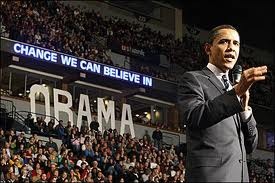
Obama_good

The words they choose are important – they offer us glimpses into who they are.  And don’t we all just want to figure out what’s behind the rhetoric?  Research shows the personalities of candidates matter to voters come election time.

James Pennebaker, a social psychologist at the University of Texas, says there are significant and meaningful differences in the language the candidates use. 

For the past few U.S. elections, he’s used a text analysis software program he helped design called Linguistic Inquiry and Word Count (LIWC). 

It calculates how often people use positive emotion words (i.e. love, care, hope, optimism), negative emotions words (i.e. pain, loss, angry, fight), self-references, and big words.

I was especially intrigued by self-reference words:what the use of the pronouns I and we says about someone. 

I was always told not to start too many sentences with I in cover letters lest I come across as too self-focused and not a team player.Not necessarily, says Pennebaker:  I denotes someone who is personal, honest, even more humble than someone who says we a lot.  (Too many I’s though can convey insecurity, depression or arrogance.) 

Pennebaker says that we in political discourse generally means you and shows speakers are detaching themselves from the audience.

While writers, and not the candidates themselves, pen most of the speeches, the argument is they’re so psychologically attuned to the candidate that they write only what would naturally come out of the candidate’s mouth.

So, let’s see what we get when we apply the LIWC method to the candidates. 

According to Pennebaker, Barack Obama, through his use of language, appears cognitively complex, socially skilled, genuine and sensitive.  What is striking is that he appears more emotionally volatile than the other two candidates when it comes to winning and losing:he tends to say I win, but we lose. 

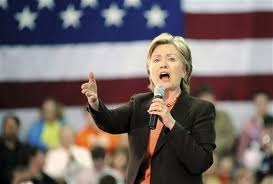
Hillary

On the other hand, Hillary Clinton and John McCain seem more emotionally stable, using I and we at similar rates after big wins or losses. 

 Clinton tends to use I a lot, as well as positive emotion words, and uses fewer fightin’ words than either McCain or Obama. 

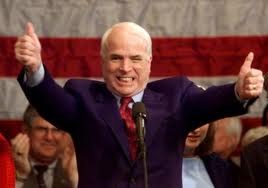
Interestingly, while McCain may come across as emotionally detached, he in fact uses positive emotion words at a higher rate than Obama or Clinton.  According to the analysis, McCain is a really optimistic guy.

Candidates’ language use can also reveal how much they’re spinning. 

Queen’s University computing science professor David Skillicorn has developed a software program that determines the amount of deception in the speeches given by the three current contenders in the U.S. election. 

He defines spin as the way that politicians slightly adjust what they say to appeal to as many voters as possible. 

Skillicorn’s indicators of spin are:  low rates of first-person singular pronouns (I, me, my) and low rates of exclusive words (or, but however).  He says people who spin tend not to create complex sentences or give many details to avoid being asked a lot of questions.

According to Skillicorn’s model, Obama is the king of spin.  McCain is the most forthright, and Clinton speaks more or less candidly, although lately, has been using more and more spin.  

Mccain

Obama’s spin is determined in part by his high use of we, perhaps to distance himself from the message. 

Skillicorn notes this changed after Obama took Wisconsin and Hawaii in late February, having taken a comfortable lead over Clinton and cut into her support by women and union members. 

Obama’s use of first-person singular pronouns then increased dramatically; Skillicorn figured it was because Obama thought he had the nomination. 

Obama’s use of language in his famous speech on race arguably says more about him than his previous speeches. 

Skillicorn found Obama used spin when talking about issues around his pastor:“we need to think about that”, says Skillicorn, translates as “you need to think about that.” 

But James Pennebaker says this speech offered a glimpse of the real Obama.He says Obama was laying out an argument, a world view, almost as if there were no audience:  “It was a ‘this is who I am’ kind of speech.”

So, what does all this speech analysis say about who might win the election? 

Well, the research isn’t irrefutable, but past elections have shown that the candidate who spins the least tends to win (in the Canadian context, Skillicorn found Stephen Harper used the least amount of spin during the 2006 election). 

And whatever you say about George W. Bush, he has (or at least had) a likeability factor.  He used I at much higher rates than either John Kerry or Al Gore, who appeared detached from their audiences.  “Bush may seem like a dufus,” says Pennebaker, “but he always comes across as a human being.” 

And that human factor may be what puts you ahead, because what is a presidential campaign but a glorified job application?  So in your next application, remember:  use I avoid we, speak from the heart, and be positive. 

As it turns out, all your boss really wants is a human being.

Brushing up on Big Words

Standard

Jan. 11, 2008

My brother-in-law, a bright political science professor, recently admitted that whilst expatiating in class, he was about to articulate a complex word, but at the last minute decided to use a simpler one. The word was dichotomy.

He wasn’t sure all the students would understand it, and says he’s becoming more conscious of the words he uses.

It got me thinking about big words.  I recalled a morning a few months ago. I was religiously brushing my teeth while stuffing my head with the day’s news. A story I heard made me stop mid-brush.  It was about serial killer Robert Pickton.

word

The defence was trying to prove that his IQ was below average. But in a test, Pickton could define words like lugubrious, pilfering, wildebeest and dromedary.  Huh?  This wasn’t the vocabulary of a simpleton. Pickton reasoned that he “knew animals”.

I reasoned that the average bloke on the street probably recognizes half of those words. And I felt I wasn’t doing a good enough job incorporating complex words into my daily conversations.

The English language is growing, bursting with new creations and a steady parade of words from other languages. So why, as English approaches its millionth word, do I feel my own vocabulary isn’t growing along with it?

After all, I love words.  I really do.  When I lived in Germany, I quickly boosted my German vocabulary using a very simple method:  sticky notes.

At the end of the day, I gathered up the new words I’d discovered and wrote them on one half of a yellow sticky note.  On the other half, I wrote simple definitions.  I stuck it to my bathroom mirror, figuring I could learn them while I brushed my teeth (really, what else do you do?)  One sticky note became two, then three and four until the whole side of the mirror was plastered with words.

My German roommate was thrilled because it boosted his English vocabulary.  The system proved so successful, I made new vocabulary notes to bring with me on a bike tour.  Whenever I got bored of cows and sunflowers, I learned a new word.

Back in Canada, I continued to feed my hunger for words.  Whenever I came across a word I didn’t know, I jotted it down.  The words I might actually use in daily conversation made the sticky note short list, words like: soporific, irascible, turpitude. 

I stuck it to my bathroom mirror and each time I reviewed the list and recalled the definitions, I flashed myself a toothy grin (my teeth and vocabulary were mutually getting more brilliant).  I puffed with pride when I casually dropped a nugget into conversation.  That remark was so insensate, I’d say.

smile

Our vocabulary acquisition, I realize, naturally drops off as we leave school.  It’s not that we don’t learn new words. There are scrumptious words all over the place, ready to be picked up ingested.  It’s just that fewer of them seem to be rolling off the tongues of the general populace.  Maybe they’re just stuck in our heads.

A media trainer for more than twenty years,Barry McLoughlin teaches people to simplify their message.  He too is noticing big words are dropping off.  McLoughlin says politicians used to hide behind a wall of complicated words.

Joe Clark was known for his loquaciousness, referring to Canada as a “symmetrical confederation”.

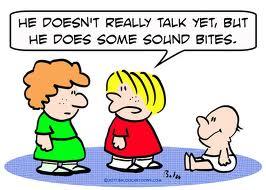
Richard Nixon buried his message in cluttering phrases.  McLoughlin says media and advertisers, attuned to shorter attention spans, are forcing increasingly simpler messages.  In the past forty years, an average TV sound bite has shrunk from 42 seconds to seven.

“Vocabulary isn’t necessarily prized in today’s society,” says McLoughlin.  “People are embarrassed to sound like a policy wonk or an egghead, so they use simpler words.”  He says politicians can’t afford not to simplify their message:  if they don’t, the media will.

Barack Obama is someone who employs small words to great effect, urging Americans to look past “red states” and “blue states” to see a United States.  On the other hand, George W’s use of simple words is just, well, wrong on so many levels.

It’s not only the media; technology is also encouraging us to fit fewer words onto smaller screens, write more emails faster. As we try to get the message out quickly, we generally choose words that are most familiar to us.

“I think it’s a troubling sign in a way,” says McLoughlin.  If you’re shrinking your vocabulary, you’re undermining the quality of dialogue you’re having, and that harms the quality of relationships you have.”

A strong vocabulary allows for nuance, extremely important in diplomacy and leadership positions, he says.  Young people who are growing up without the ability to have a sophisticated vocabulary to calibrate what they want to say, undermine their ability to communicate.

John Serembus, a Philosophy professor at Widener University, is noticing a shift.  For years, he’s taught in “sound bites” to deal with shorter attention spans.  He teaches for ten minutes, stops for questions and a joke, teaches for ten minutes – you get it.

Sound_bites

Lately, he’s noticing that vocabulary is becoming an issue.  A student in his logic class didn’t fare well on a test, admitting he didn’t understand the material because he couldn’t follow the “big words” used in the lecture.  It turned out they were words like implication, hypothetical and consistency.

“Needless to say I was taken aback.  But as I thought about it, I realized that he probably never encountered those words until now,” says Serembus.“As a result,” he says, “I still use the words I want to use whether they are ‘big’ or not, but I do a lot of paraphrasing in simpler terms.”

And now, so many Canadians speak English as their second or third language.I often adapt my language for non-native speakers, andI wonder what kind of long-term effect this will have on our vocabulary.

Now I know there are those who will say au contraire, our vocabulary ain’t shrinking.

Language expert David Crystal says he hasn’t noticed any particular change in word length over the past decade.Yes, sentences have become shorter, he says, but that can create more reliance on the words selected, which can actually get longer.

Crystal says we tend to underestimate vocabulary sizes. Most people think the average size of a person’s vocabulary is a few thousand words, whereas it is actually tens of thousand.

It’s hard to know any of this for sure, though, because as Crystal says:”Vocabulary (by comparison with grammar and pronunciation) remains a hugely neglected topic of linguistic study…It’s the scale of the exercise which is so off-putting.”

In the meanwhile, I shall do my utmost to quaff from the fountain of English.  I’m going back to my sticky note—brushing method.

Vocabulary, like teeth, needs to be kept in good working order to keep its bite.

Chinglish: Lost in Translation

Standard

October 26, 2007

Viewpoint-8

I’m in China, covering the Women’s World Cup of soccer for CBC Radio. It’s another late night and I’m resorting to room service to quell the rumbling in my tummy. But, scanning the menu, I’m not at all sure about the offerings: stuffed fatty meat pork makes me squirm. Slobbering chicken, lion head or cheese melting in ham parcel…I’m not sold. 

I opt for the complimentary apples on my table – at least I know what I’m getting. 

English mistranslations of food dishes are especially rampant in China. My favourite example comes through the dietitian for the Canadian women’s soccer team.

For obvious reasons, the players were very careful not to be too experimental with food. Chicken is usually a safe bet, but not when the dish is translated as the fragrance explodes the cowboy bone. That could have been too, well, explosive.

Other examples of mistranslations abound. A massage therapist advertises: Relex your tired of bady; a toilet for a disabled person is labeled Deformed man toilet; a slippery road is marked Beware, the slippery are very crafty (but they are!). 

Drinktea is hung on a shop door to mean it’s closed (it also means resting in Mandarin). 

Yes, Chinglish is the weird and wonderful result of an English dictionary colliding with Chinese ideograms that often have multiple meanings. 

These linguistic delicacies may well stay in China, but some experts say Chinglish words are zipping around the globe, even working their way into the English language.

The Global Language Monitor tracks and analyzes trends in Global English. Its president, Harvard-educated linguist, Paul Payack, says the Chinglish phenomenon is helping drive the globalization of the English language, contributing up to 20 percent of Global English words. 

Payack says the rate has increased in the past several years because of China’s rising number of English speakers and economic boom. The surge in Internet users has allowed for the free flow of Chinglish. 

In its most recent annual survey, GLM selected the top Chinglish words: No noising (quiet, please!), airline pulp (food served on a plane), jumping umbrella (hang-glider) and question authority (information booth, interestingly enough).

I decided to take some local words back home with me, stuffing them into my already bloated suitcase:  Financial Supermarket (what better word for one store offering stocks, insurance and real estate services?) and Super Brand Mall (only top-end items, please).

Paul Payack says unless a word is on paper, the Oxford English Dictionary doesn’t count it, but he insists the real language is what’s spoken and what’s used on the Internet.

“Maybe only five percent of Chinglish words will stick around,” he says, “but that’s a lot.” He expects the language cycle will go into high gear during next year’s Beijing Olympics.

Viewpoint-7

The rising influence of China is coming not only through Chinese-influenced English, but also through its more famous export: Mandarin, the most widely spoken language on the planet. And beyond China’s borders, tens of millions of people are now picking up scribe and learning to ink the ideograms. 

University of Victoria linguistics professor Hua Lin says “if Mandarin Chinese ever becomes the first choice of a second language to learn, as English has been, there is…less of a chance for these Chinglish expressions to survive or make significant impact.” 

Meanwhile, China’s biggest cities are intent on sweeping the streets clear of unintelligible Chinglish translations.  Beijing has launched a campaign to stamp out bad English in time for its international debut at next year’s Olympics.  

At Shanghai’s Foreign Languages Institute, a bespectacled Zhang Jiani has spearheaded a student initiative to clean up English on menus, in taxis, shops and banks.

She’s an accounting student, but says this is her civic duty: “I think most of the students here have some English skills and I think it’s our responsibility to do something for the city.”  She says they must, if Shanghai is to market itself as a truly international city.

So, once every few weeks, she meets up with a group of students to trek through designated parts of the city. Equipped with electronic dictionaries, they studiously note any suspected mistranslations.They get the correct wording from a professor, then deliver it to the perpetrator who, they hope, makes the correction.

Drinktea may mean closed for business, but this up and coming generation of Chinese will work until the worst of the Chinglish is laid to rest.